
The bracelet a man who doesn't wear jewellery actually wears
He said it once, plainly: he doesn't wear jewellery. Every birthday since, it's the same shop window, the same hesitation, the same walk out empty-handed. The problem was never his taste. It's that everyone keeps offering him jewellery.
For a man who doesn't wear jewellery, give an object that says something about him rather than jewellery that shines: an engraved cherry wood bracelet on a marine cord, with no clasp. The three people give most: the GPS coordinates of a place that matters, the silhouette of his bike (road, city, gravel or mountain bike), or two initials and a symbol for a man who wants nothing showy. At Marcel et les Blondes, each bracelet is engraved to order in our Aveyron workshop, in three sizes and ten cord colours, and delivered across France and the European Union.
Another trip round the jewellery counter, for nothing
The window looks the same as last year: thin chains, a few plaited leather bands that all blur into one. You go in, you look, you leave ten minutes later with nothing — not out of indecision, but because you already know how it would end.
A drawer. Another drawer, next to the watch he never winds and the leather bracelet from two Christmases ago, worn perhaps three times. And yet he isn't hard to read: he said, once, plainly, that he doesn't wear jewellery, and nobody has quite heard what that actually meant.
What he actually turned down
"I don't wear jewellery" almost never means "I don't want to wear anything." It means: nothing that shines for the sake of shining, nothing noticed before it's understood, nothing he'd have to explain in a meeting or take off before a run. Jewellery is chosen for the look it gives. An object is chosen for what it says — and that changes everything you can give him.
The real question, before buying something else, isn't "what would he like?" but "what, about him, isn't up for debate?" A place he keeps going back to. A bike he maintains better than his own health. Or, if none of that sounds like him, just two initials and a symbol, nothing more. A fact, unlike jewellery, doesn't need to suit anyone.
A place, engraved rather than written
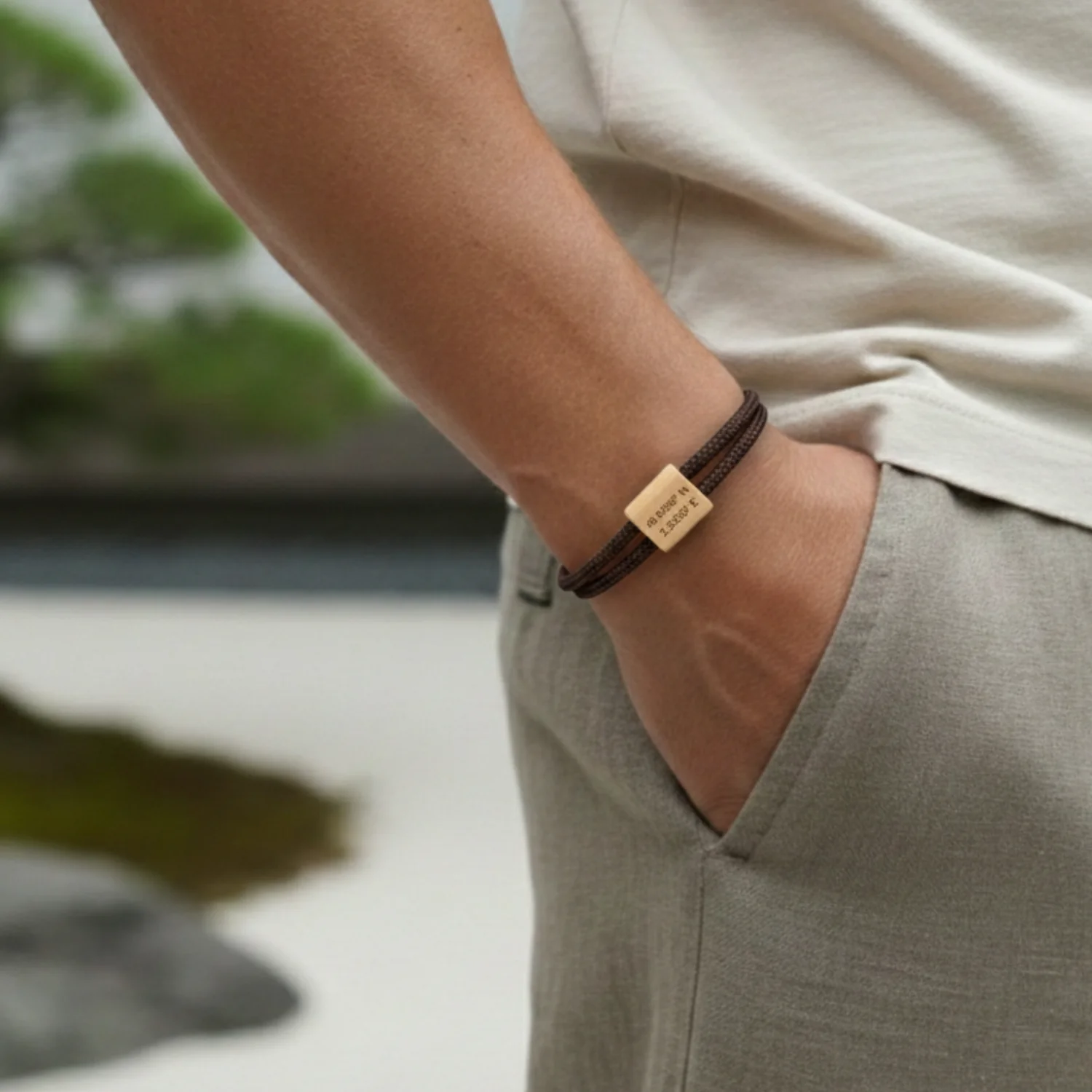
The GPS coordinates bracelet doesn't look like anything you'd find at a jeweller's, and that's exactly why it works: a cherry wood bead on a marine cord, two lines of numbers — latitude, longitude — where a name would usually go. Pass him in the street and nobody else would guess what it says. He would.
The place can be anything, as long as it actually matters: the childhood home, where he proposed, the town he grew up in and rarely gets back to. No clasp to fiddle with, no size to guess — the cord is set once around the wrist with its sliding knots and doesn't move again. It's a gift worn every day rather than kept in a drawer, precisely because none of it reads as jewellery.

What he rides, rather than what he wears
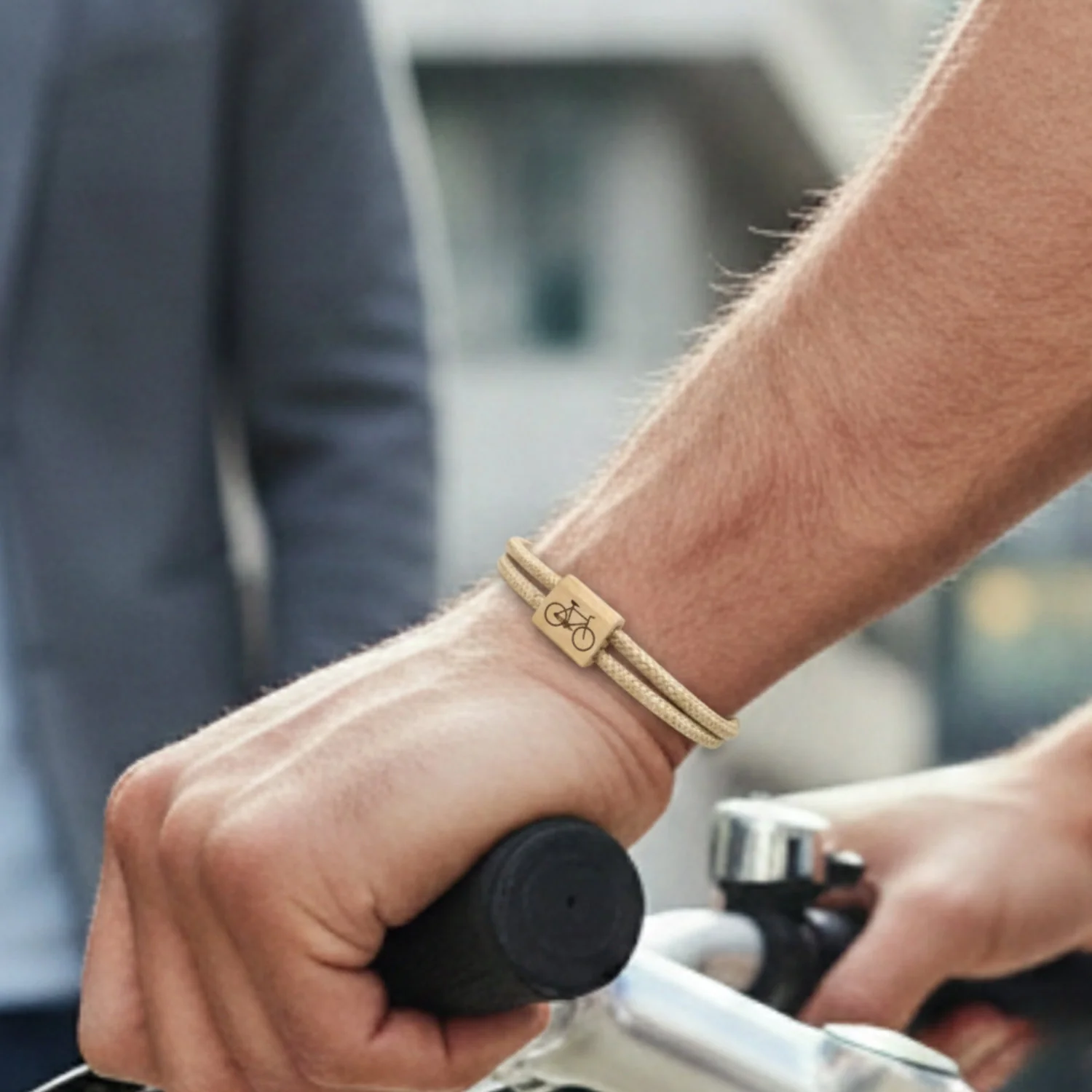
For someone whose passion you know far better than his jewellery size, there's an even more direct answer: engrave what he does, not what he's supposed to like wearing. The bike bracelet laser-engraves the exact silhouette of his ride — road, city, gravel or mountain bike, the one most people choose — onto a wooden bead, nothing else added. No name, no date: just proof that you know what he rides.
It's a detail that matters more than it seems: giving a generic bike to someone who can tell a gravel frame from a mountain bike at a glance is a bit like giving wine to someone without knowing if they drink red. And at seventeen millimetres of wood, the bracelet stays discreet enough to keep on once he's off the saddle — unlike the bike itself, it doesn't show off.
And if he has neither a place nor an obvious passion
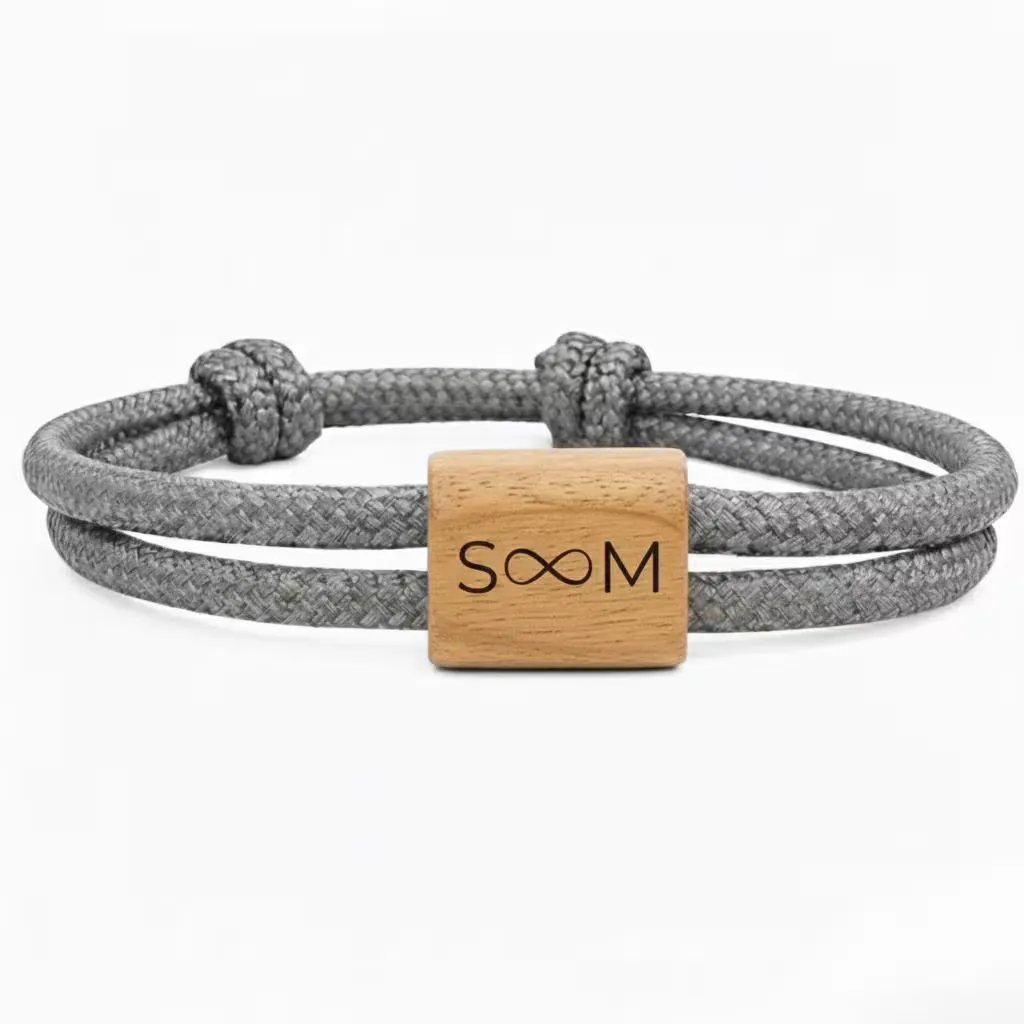
This is the most common case, and usually the worst handled: no place matters quite that much, no hobby is worth engraving. The answer isn't to dig deeper, it's to engrave less. Two initials either side of a symbol — infinity, a heart, entwined hearts, an arrow-pierced heart, or nothing at all — set on a single line, on the same cherry wood and the same marine cord as the other two.
It's the plainest of the three, built for a man who genuinely doesn't like showy jewellery: nothing wrapping the wrist, nothing heavy, three signs and that's it. Plenty of people choose it with their children's initials rather than a partner's — worn every day without announcing anything beyond a fact he already knows.
Which of the three, for him
There's no absolute rule for choosing between the three, only one question worth asking before any other, and it settles most of it: what, about him, genuinely isn't up for debate?
- He has a place he keeps going back to: GPS coordinates, engraved rather than written.
- He rides, on the road or off it: the silhouette of his bike, road, gravel or mountain.
- You know neither about him: two initials and a plain symbol, nothing more.
Frequently asked questions
How do I get his size without asking him outright?
Borrow a watch or bracelet he already wears and measure around it, or simply order it large: the marine cord is then set on the wrist by its own sliding knots, no clasp involved. Three sizes cover almost everyone.
What if he really has neither a bike nor a place that stands out?
That's exactly what the initials and symbol bracelet is for: two letters and a plain sign, asking for nothing more than a name. Plenty of people choose it for that reason, rather than out of a lack of ideas.
Can it be worn every day, including for sport?
Yes, it's built for that: the marine cord takes sweat, rain and hand-washing without issue. The cherry wood itself is best taken off before a shower or a swim, a quick habit, much like a watch.
Does the cherry wood age well when worn daily?
It develops a patina, which isn't a flaw: it's a living material, and the grain and tone already vary slightly from one bead to the next before it's even worn. Daily wear darkens it very gradually, like an object used rather than displayed.