
A gift for the mother, not the baby
Three days in, there are seventeen babygros in the room and not one thing for her. Nobody did it on purpose. Presents follow the gaze, and everyone is looking at the baby.
Count the parcels
It is an exercise nobody does, and it jumps out of the hospital photographs. Vests, a comforter, a mobile, three newborn outfits that will fit for a fortnight. And in the middle of it a woman in a hospital gown who has been given nothing, because she is no longer quite the subject.
It is nobody’s fault. A newborn pulls in everything that comes through the door — the looks, the hands, the parcels. But whoever wasn’t there has an advantage, precisely because they don’t have the baby in front of them. They can still think of her.
What she needs, and nobody gives
Not a twentieth babygro. Someone bringing food. Someone taking the older one for an afternoon. Someone asking how she is before asking how the baby is. Those are acts rather than objects, and in the first weeks they are worth all the rest — which is worth saying plainly, even by people who sell objects.
Then comes the moment the visits stop dead. Three weeks, six weeks, whenever the last appointment has been and gone. The house goes quiet, the phone stops, and nothing visible is left of what happened. That is when an object finds its place. Not a piece of baby equipment: something that names her, and says that what she went through took place.
Something that names her
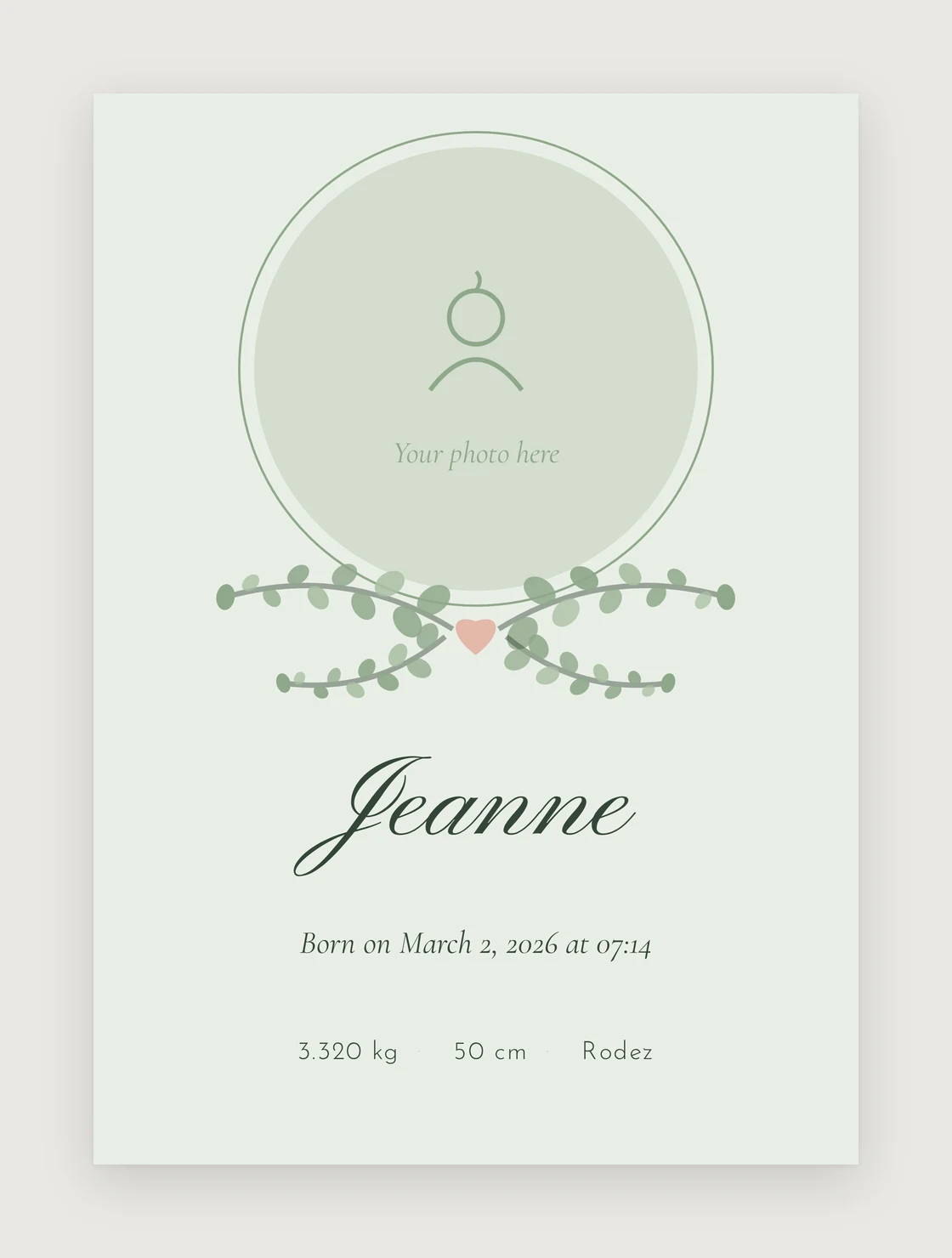
A birth print is a present for the parents, not for the child — the child won’t read it for another four years. What it does is put a date on the wall that would otherwise dissolve into the months that follow. It carries the name they chose together and the hour they repeated down the phone all day. And it stays there once everyone has gone home.
There is something smaller and closer to the skin: a bracelet carrying the name and the date, worn on the wrist. It is the only thing on the whole list that leaves the room with her. It is also the one to bring to the hospital, when you know perfectly well that everything else is going to end up in the cot.
The right moment is not the obvious one
Not the maternity ward, or only very simply. The first days are saturated: ask anyone what happened between the third day and the sixth and they will not be able to tell you. A present left there drowns in the rest, and nobody can help that.
Three weeks. Six weeks. The day she goes back to work. Those are the hollows where nobody sends anything any more, and where a parcel has an effect out of all proportion to what it cost. Allow roughly a week for a French address and ten days across the rest of Europe, and aim for the hollow rather than the day itself.
Frequently asked questions
What do you give a woman who has just given birth?
Something that is hers rather than the child’s. In the first days that mostly means acts: food, an afternoon without the older one, a conversation that isn’t about the baby. After a month or so, an object carrying the date and the name comes into its own, because it arrives at the point when nothing else is arriving.
Should you still give something for the baby?
The baby will get plenty, and will see none of it for a long while. If you are giving one thing, give it to the parents: they are the ones who will be looking at it for the first five years. A dated object belongs to both of them, whereas a newborn-size outfit has a working life of about three weeks.
What can you do from far away?
Two things, and the first costs nothing: write a second time three or four weeks later, once the messages have stopped arriving. The second is to send something dated rather than flowers. Flowers last six days and ask for a vase from somebody who hasn’t slept; what goes on a wall stays put.
And for a second or third child?
That is where it counts most and where least tends to arrive. The first got everything, the next one noticeably less, and parents register it even if they never say so. An object with that child’s own name and date on it mends something small but real — especially hung next to the older one’s.