
The photos on a phone, when the dog isn’t here any more
When a dog or a cat is gone, what remains is photos on a phone and a wish for something to hang up rather than scroll past. Here's how to choose the photo, what to write underneath, and how to give it to someone who has just lost theirs.
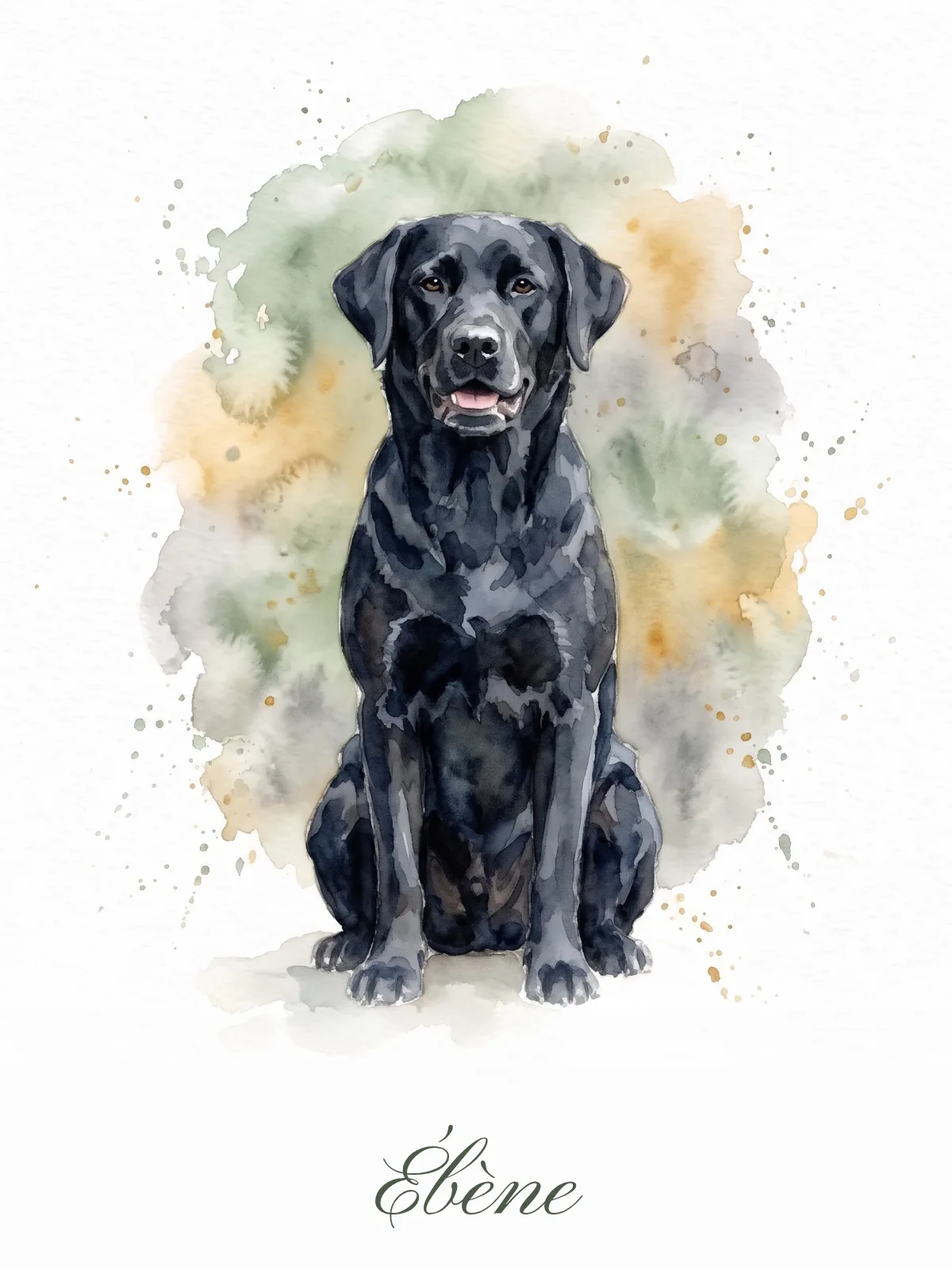
To keep the memory of a dog or cat who is gone, or to give it to someone who has lost theirs: a watercolour portrait, painted from their photo, with their name underneath in handwriting and an optional line of text. It is painted by artificial intelligence; you see it before ordering, with three tries per photo, and a likeness isn't guaranteed. Made to order at the Aveyron workshop, from A4 up to 70 × 100 cm.
Scrolling, one last time
One evening, long after, you open the phone's album to look for something else, and there he is. The dog asleep across the end of the sofa, the dog blurred because he moved, the dog seen from behind at the far end of a beach. You scroll. You stop. You go back, stop again, and then you close the phone, because you don't know what to do with a photo you can only look at.
There are hundreds. None of them is hanging anywhere. That is the strangest thing about this kind of loss: there is so much left, and almost none of it is anywhere in the house.
The photo you're looking for
Often, what you're looking for isn't the best photo but the one where they look at the camera, or nearly: the head from the front, the eyes, the nose, the way the ears tip. It's rarely the sharpest. It was often taken in passing, on a Sunday, without a thought, phone in hand.
Fortunately, no more is needed than this: a phone photo where the face shows clearly, from the front or three-quarters on, with eyes and muzzle in view. An older photo can do. A blurred one, taken from far away or against the light, will give a less faithful portrait.
Their portrait, painted from the photo
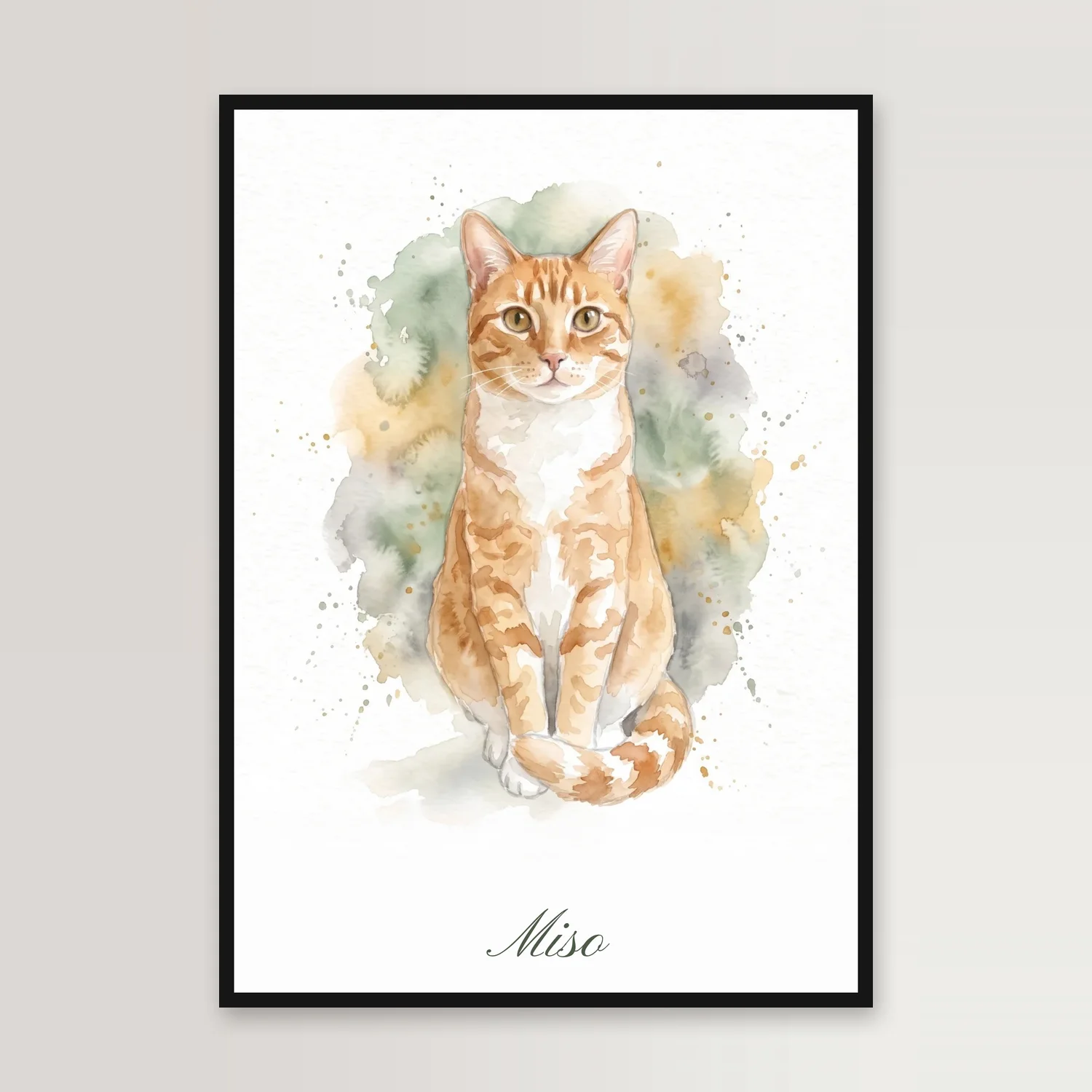
The watercolour portrait is painted from what that photo shows: the coat, the ears, the eyes, the markings, surrounded by a cloud of soft colours and a few splashes, on grainy paper. Four palettes to choose from: sage and ochre, dusty pink, ocean blue, terracotta. It exists for a dog and for a cat, on the same principle.
If you're in the photo with them, you can still choose it: in our trials only the animal is painted, without you, the lead or the background, and you see the result before ordering. It's sometimes the only photo where you're together, and it can still be used.
Let’s be plain about it: this isn’t a hand-made painting. Artificial intelligence paints the portrait from the photo in about half a minute, and you see it before ordering, with three attempts per photo. The image you approve is the one the workshop prints. We don’t promise a likeness: if it isn’t them, try another photo rather than order a portrait you don’t recognise.
Their name, a few words underneath
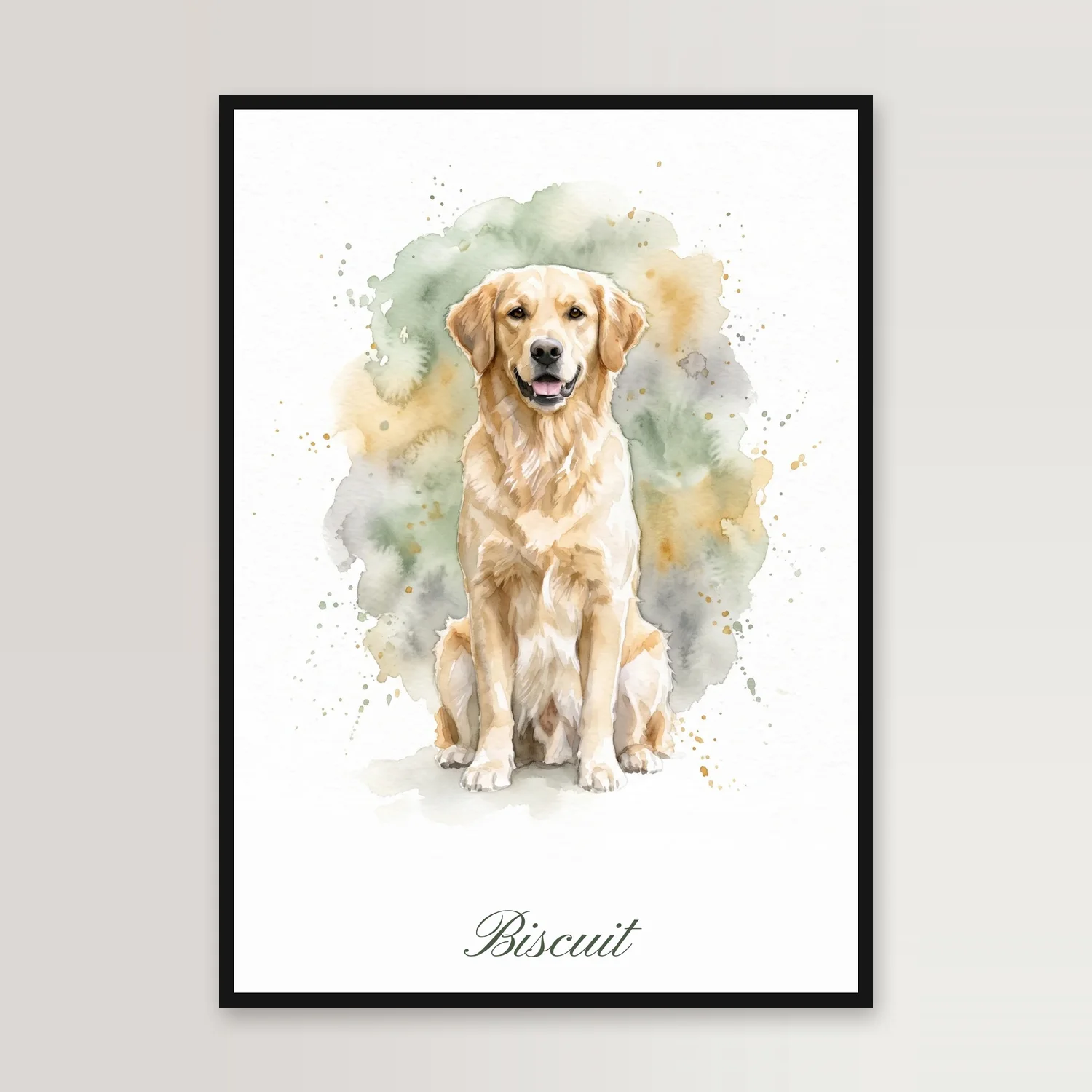
The name is written under the portrait, in handwriting, and can be changed at any time without repainting the portrait. Beneath the name, an optional line of text, forty-eight characters at most: their years, the start and the end separated by a dash, or a few words of your own, the sort you don't say out loud. You see them before ordering.
Many people write only the name, and that is perfectly fine: a first name is enough to make the portrait theirs, and to say it under your breath as you walk past. For a cat, the portrait exists too, with the same line of text and the same palettes. A cat won't pose: if the photo can still be taken while they're with you, shoot close up, in daylight, when they're looking at you.
Giving it to someone who has just lost theirs
There is no right moment for everyone. Some people like to receive an image of them straight away, others need time. If in doubt, start with a simple note, without a gift.
When the time comes, ask for a photo of them, sharp and from the front if possible: many are touched that you thought of it, and a sharp photo gives a more faithful portrait. You see the portrait before paying; if it doesn't look like them, try another photo rather than give it.
A simple note with their name is worth more than a fine sentence: “This is Biscuit.” That's all there is to write. The rest, the portrait will say, hanging on the wall.
When the dog is in the family photo
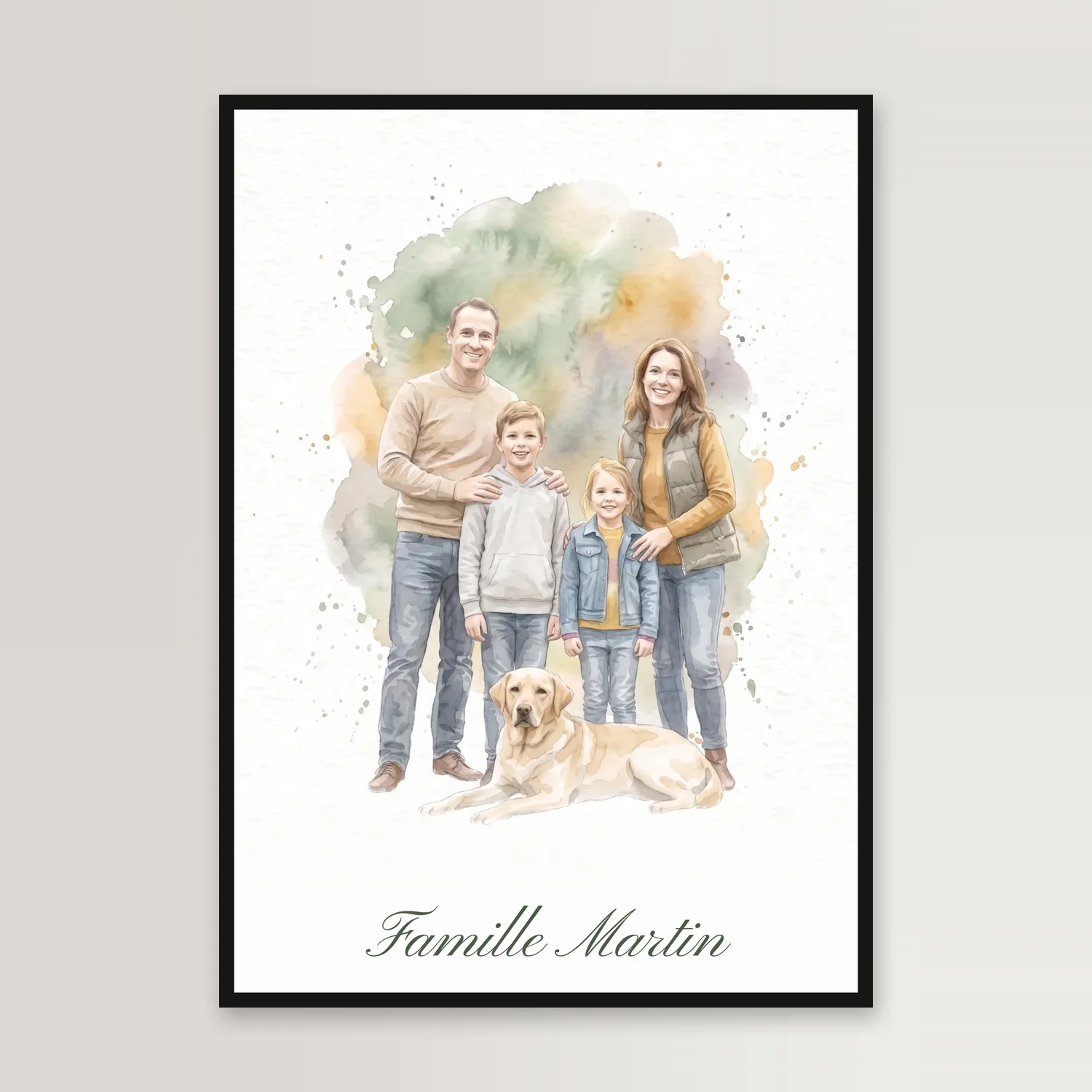
Sometimes the photo you keep is everyone's: the family on the sofa, the dog lying in front. The family portrait then paints the parents, the children and the pet of the house, with the family name underneath. In our tests, a family of four, dog included, was painted in full; for any other animal the result isn't guaranteed. And for the one who is still here, a portrait made while they're alive makes just as good a birthday or adoption present.
Frequently asked questions
Can you make a portrait of a dog or cat who is no longer here?
Yes. When an animal has gone, what remains is photos on a phone and a wish for something to hang up rather than scroll through. The portrait is painted from their photo, from what it shows: the coat, the ears, the eyes, the markings. Their name is written underneath, with an optional line of text.
Which photo should I pick when I only have old ones?
The one where they look at you, or nearly: the head from the front or three-quarters on, with the eyes and muzzle clearly visible. An old photo, or one taken on a phone, can be enough; a blurred one, from far away or against the light, gives a less faithful portrait. If you are in the photo with them, in our trials only the animal is painted, and you see the result before ordering.
Is the portrait painted by hand?
No, it isn’t painted by hand. The image is produced by artificial intelligence from your photo in about half a minute. You see it before you order, with three attempts per photo, and that same image, untouched, is what comes off the workshop printer. We don’t promise a likeness: if it doesn’t look like them, another photo is better than ordering it anyway.
How do I give this portrait to someone who has just lost their pet?
There is no right moment for everyone: some people like to receive an image of them straight away, others need time. If in doubt, start with a simple note, without a gift. When the time comes, ask for a sharp photo, look at the portrait before paying, and enclose a simple note with their name rather than a fine sentence.
What happens to the photo I upload?
The photo is only used to make the portrait. It stays in a private space, is never published, and goes thirty days after dispatch, the painted portrait with it; if you take the print-ready file, the thirty days start at purchase. An artificial intelligence service (Google) receives it to paint it, and for nothing else.